

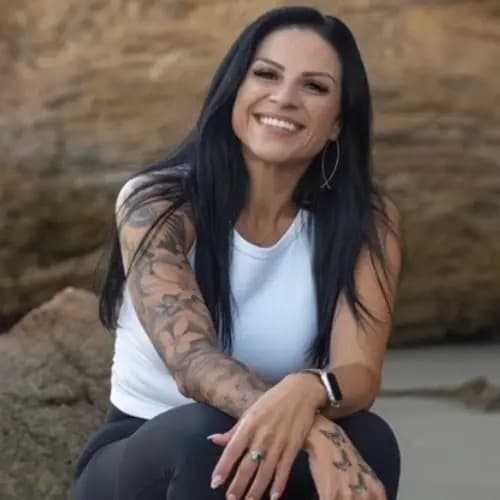
Clinical team

Licensed clinicians your teen will actually connect with

Every member of our clinical team holds an active California license and specializes in adolescent mental health. Warm, direct, and skilled at earning trust — especially with teenagers who are skeptical of therapy.

  • PsyD, LMFT, LCSW, MD credentials
  • Adolescent specialization required
  • Same clinician across session types
  • Active California licensure
Clinical standards

Who treats your teen

We do not rotate teens through a generalist intake pool. IOP and outpatient teens work with a consistent clinical team — the same people in individual, group, and family sessions whenever clinically appropriate.

  • Adolescent training

    Clinicians complete specialized training in teen development, safety assessment, family systems, and telehealth delivery before joining our active caseload.

  • Matched by acuity

    Assessment determines level of care and clinician match — anxiety, trauma, mood, and behavioral presentations are staffed to clinicians with relevant specialty experience.

  • Continuity of care

    Step-down from IOP to outpatient prioritizes keeping the same treating clinician — so rapport and treatment history are not reset mid-recovery.

Leadership

Clinical direction

[ portrait · warm light ]

Dr. Maya Ellis

PsyD · Clinical Director

  • Adolescent anxiety
  • Trauma & PTSD
  • Virtual IOP program design

Dr. Ellis oversees clinical standards, training, and quality review across our virtual adolescent programs. Her background includes community mental health, school-based services, and intensive outpatient care for teens with anxiety and trauma presentations.

Clinicians

The team behind daily care

Representative roles on our clinical team. Individual clinician assignment depends on assessment, availability, and specialty fit.

[ portrait · warm light ]

Marcus Reyes

LMFT · Lead Family Therapist

  • Family systems
  • Parent coaching
  • Conflict cycles

Marcus leads family sessions and parent coaching across IOP and outpatient tracks — helping caregivers support skill practice without becoming the therapist at home.

[ portrait · warm light ]

Dr. Priya Nair

MD · Adolescent Psychiatrist

  • Medication evaluation
  • Mood disorders
  • Conservative prescribing

Dr. Nair provides psychiatric consultation when medication may support therapy — with conservative, teen-specific prescribing and close coordination with treating therapists.

[ portrait · warm light ]

Jordan Brooks

LCSW · DBT Skills Clinician

  • DBT skills groups
  • Emotion regulation
  • Self-harm safety planning

Jordan facilitates DBT skills groups and individual DBT-informed sessions — with diary card review and coaching strategies for teens and parents during emotional escalation.

[ portrait · warm light ]

Elena Vasquez

LMFT · IOP Group Facilitator

  • CBT groups
  • Social anxiety
  • School avoidance

Elena moderates IOP skills groups sized for participation — practicing exposures, social scenarios, and CBT modules in a clinician-led peer setting.

Common questions

About our clinicians

In outpatient care, yes — your teen's individual therapist stays consistent. In IOP, teens have a primary individual clinician plus group facilitators who coordinate on the same treatment plan. We avoid rotating intake clinicians for ongoing care.

Yes. Every treating clinician holds an active California license in their discipline (psychology, marriage and family therapy, clinical social work, or medicine). Credentials are verified before any clinician joins our team.

During intake we ask about preferences and presentation. We match based on clinical fit, availability, and specialty — and we will tell you honestly if a requested clinician is not the best match for your teen's needs.

No. Psychiatric consultation is available when clinically indicated — often when therapy alone has plateaued or symptoms suggest medication may help. Many teens in our programs never see a prescriber. Medication decisions are collaborative with parents and teens.

Meet us on a consultation call

The best way to understand our team is a conversation — tell us about your teen, ask about clinician backgrounds, and learn who would likely lead their care.