

Mindfulness for teens who live on autopilot
Licensed clinicians teach California adolescents present-moment skills — breathing, body awareness, and non-judgmental noticing — inside virtual IOP and outpatient care.
- Joint Commission accredited
- In-network insurance
- CBT & DBT
- California telehealth
12–17
ages served
Virtual
care across CA
Mindfulness
modality
Licensed
clinicians
Clinical mindfulness — not meditation apps
At Mental Health For Teens, mindfulness in therapy is skill-building with a licensed clinician — learning to notice thoughts and body signals without immediately reacting. It's especially helpful for teens whose stress shows up as racing thoughts, tension, or shutdown.
Sessions are short, practical, and stigma-free. No robes, no jargon — just tools that fit school days and family life.
- Guided by licensed clinicians
- Brief practices — 3 to 10 minutes
- Pairs with CBT & DBT in IOP
- No religious requirement
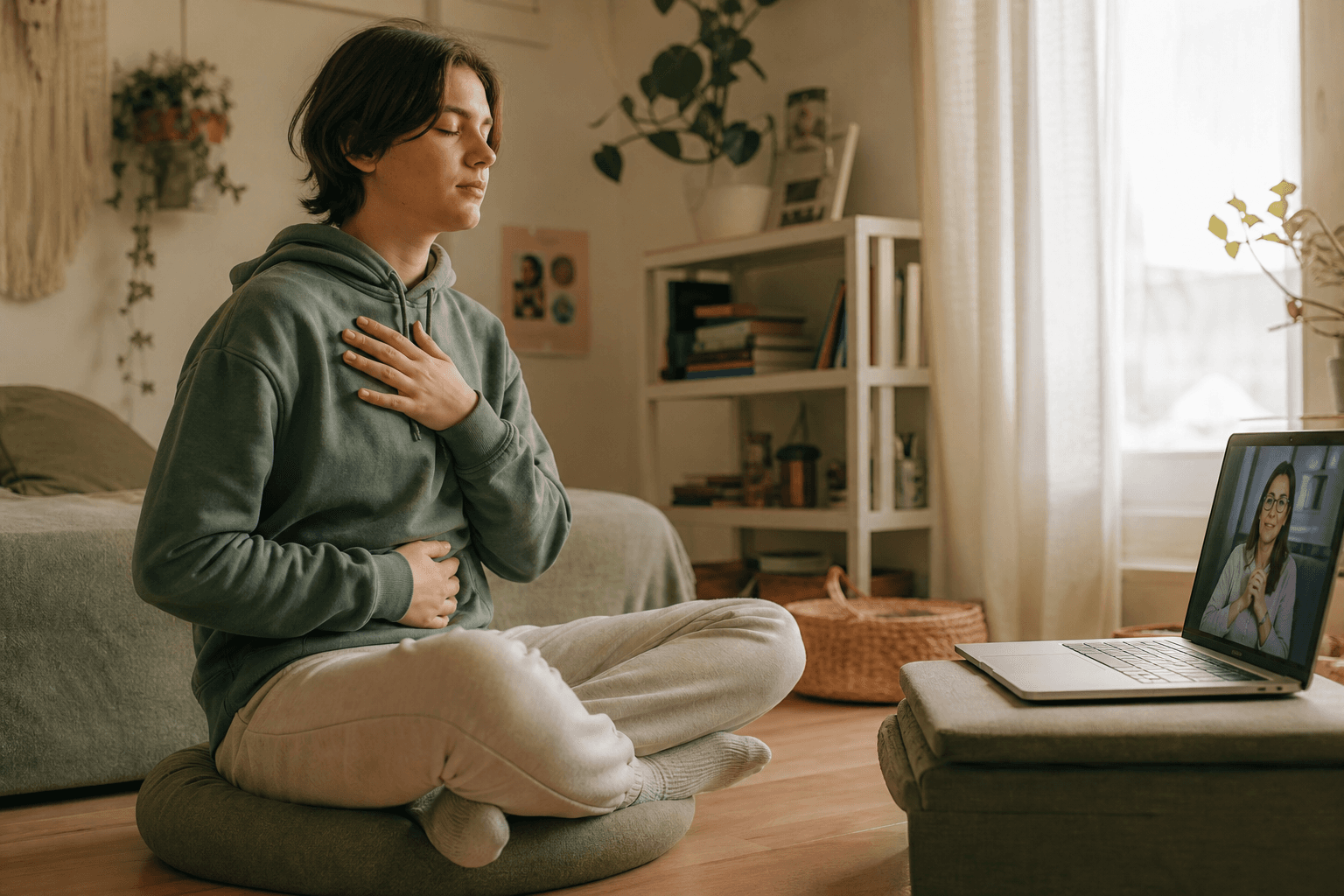
Mindfulness skills teens actually use
Teens practice in session, then use skills in real stress moments — before tests, after conflict, at bedtime.
- 01
Anchor breathing
Box breathing and paced exhale — calm the nervous system in under two minutes.
- 02
Body scan
Notice tension without fixing it — useful for anxiety, pain, and sleep wind-down.
- 03
Thought watching
See thoughts as passing events — reduces fusion with catastrophic stories.
- 04
Everyday mindfulness
Walking, eating, or showering with full attention — skills that don't need silence.
Issues mindfulness can support
Mindfulness is rarely standalone — it's a regulation layer inside broader treatment.
Stress & overwhelm
Academic pressure, social media stress, and sensory overload.
Racing thoughts & focus
Attention drifting during homework, conversations, or sleep.
Anxiety & panic sensations
Body-based calming before cognitive work in CBT or exposure.
Depression & numbness
Gentle reconnection with present experience when shutdown dominates.
Reactivity & anger
Pause between trigger and response — pairs with anger and DBT work.
Group IOP regulation
Opening group with brief mindfulness sets tone for skills work.
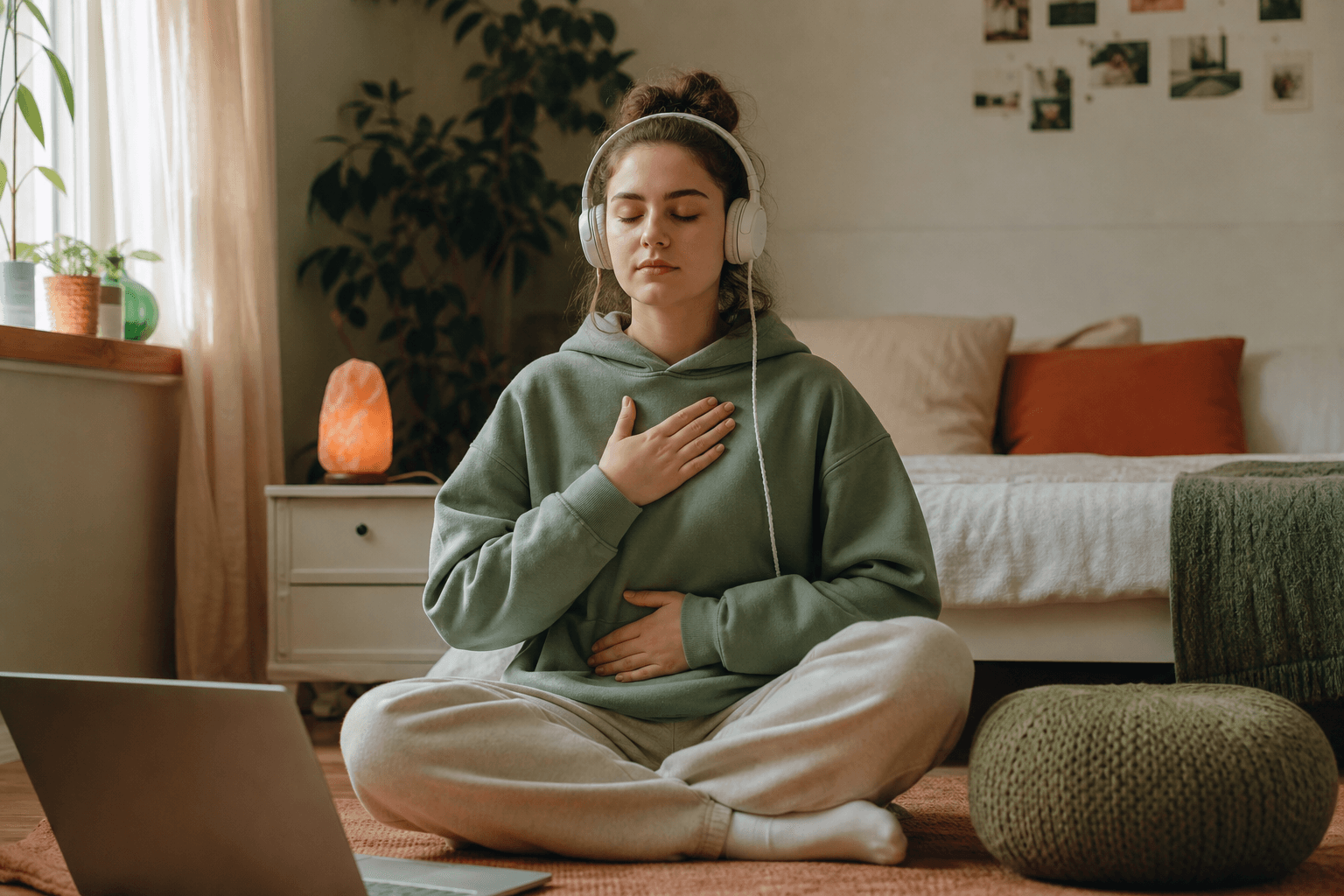
How online mindfulness therapy works
Guided practice on video — teens learn in private space where they'll actually use skills.
Parents learn when to encourage practice vs. when to give space.
- HIPAA-compliant telehealth platform
- Private, distraction-free session space
- Coordinated with individual, group & family therapy
- Optional parent check-in before the first session
- Audio guides optional between sessions
When mindfulness therapy is appropriate
Mindfulness supports other modalities — it's not a replacement for comprehensive care when symptoms are severe.
Often a good fit
- Teens 12–17 with stress, anxiety, or reactivity needing regulation skills
- Adolescents open to brief guided practice
- Families seeking non-medication-first coping tools alongside clinical care
- Teens in virtual IOP or outpatient programs
- Those who feel overwhelmed by traditional talk-only therapy
Not the right level
- Immediate safety crisis — call 911 or 988 first
- Active psychosis or severe substance use requiring 24-hour care
- Teens who cannot participate safely on video
- Expecting one modality alone without a coordinated treatment plan
- No reliable private space or home supervision for consistent virtual sessions
Where mindfulness fits in care
Mindfulness skills appear across these virtual programs — especially IOP groups.
01
9–12 hrs / week
Virtual IOP
Structured intensive care through secure telehealth when weekly sessions are not enough.
Explore program02
1–3 sessions / week
Outpatient program
Weekly individual, group, and family therapy with coordinated care.
Explore program03
Flexible scheduling
Teen therapy
Individual counseling as a standalone or step-down level of care.
Explore programExplore further
DBT for teens
Mindfulness is the first DBT module.
CBT for teens
Calm the body before cognitive work.
ACT for teens
Present-moment awareness in values work.
Teen anxiety treatment
Regulation for anxious arousal.
Teen depression treatment
Gentle activation and body awareness.
Teen OCD treatment
Urge surfing and mindful pausing.
From first call to first session
Most families move from first call to first session within days — not weeks of waiting.
- 01
Speak with admissions
A confidential call with our admissions team to understand your teen and answer questions. It is not a clinical evaluation.
- 02
Assessment and benefits
If you move forward, a licensed clinician completes the clinical assessment. We match the level of care and verify insurance benefits.
- 03
Start virtually
Many families can begin within five to seven business days when virtual care is clinically appropriate, program capacity is available, and insurance authorization is complete.
FAQs
What families ask before starting — every answer is a starting point, not a diagnosis.
Clinical mindfulness in therapy is secular skill-building — no religious belief required.
No — we use brief, teen-friendly practices. Long silent meditation is not the goal.
Mindfulness-based approaches have research support for stress, anxiety, and depression — used here within full treatment plans.
Yes — clinicians guide practice live and assign micro-homework teens can do at home.
When part of IOP or outpatient therapy, sessions are billed as mental health treatment.
See if this modality fits your teen
Book a free consultation — we'll explain how this therapy works in our virtual IOP and outpatient programs, and verify insurance.