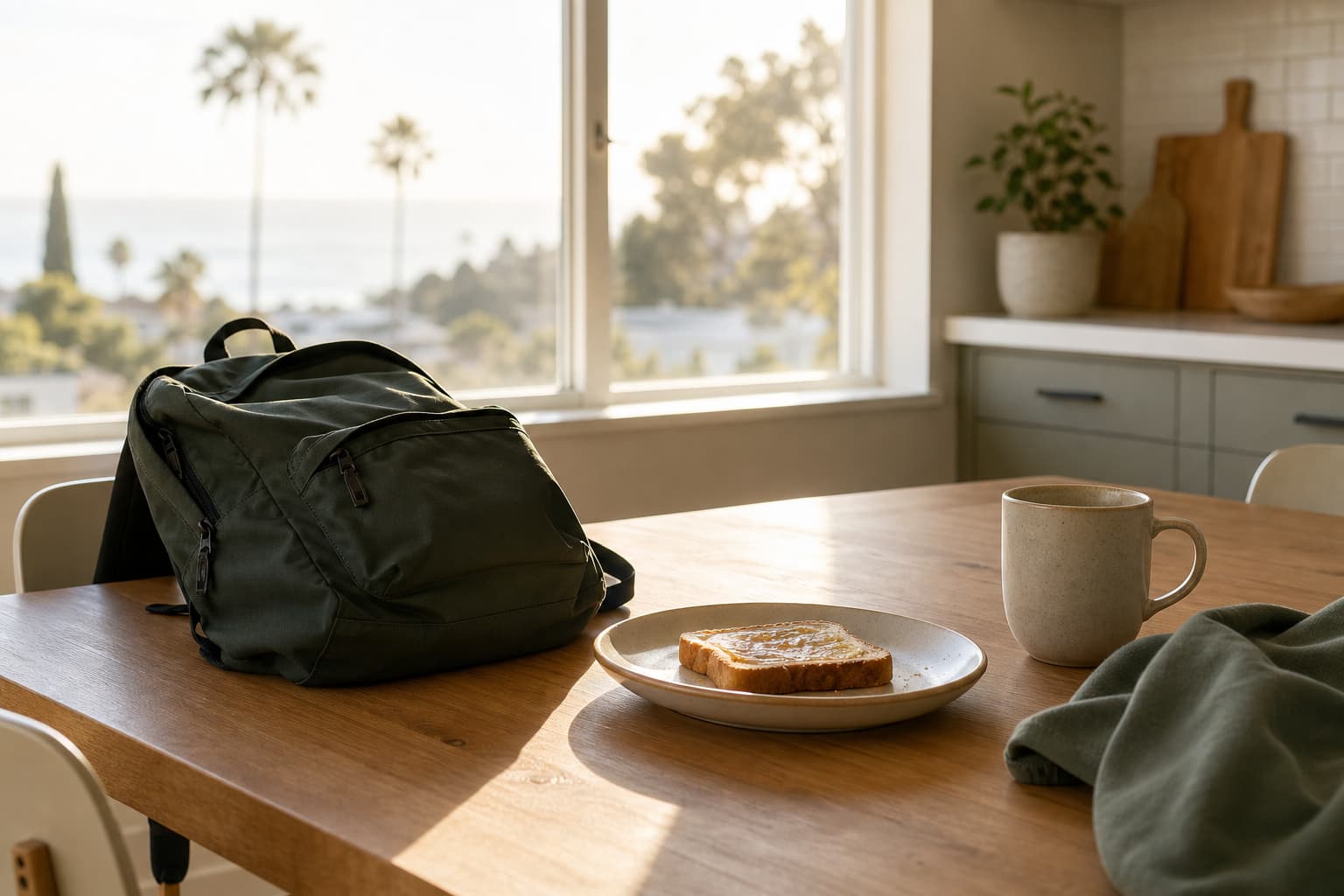

Skipped lunch and a refused carpool usually mean a vomit fear has started organizing the weekday, not a kid who suddenly got picky about food.
The fear of throwing up can keep a 12-to-17-year-old out of the cafeteria, a shared ride, and any class that requires standing up. Parents often hear that as a sensitive stomach, but the useful read is the loop: a flutter in the gut, a safety move such as skipping the meal or the bus, then a brain that files that room as dangerous. This page stays on that school-day pattern and will not diagnose anyone or hand you a homemade exposure ladder.
If your child is in immediate danger or talking about wanting to die, call or text 988 for the 988 Suicide & Crisis Lifeline, or text HOME to 741741, and keep our [crisis resources](/resources/crisis-resources) page saved on your phone.
What fear of throwing up looks like in teens
The pattern stays quiet until a trigger shows up, then the day tilts: an empty lunch bag, eating only in a parked car, scanning for bathrooms, asking who stayed home “sick,” or cutting food before a test or field trip.
At home the safety moves look ordinary, such as extra gum, constant water, date-checking leftovers, and asking you to smell a container first. Sleep runs short because the body will not stand down, and grades can still look decent while the map of safe rooms shrinks.
Watch the job the behavior is doing: if the point is making sure they will not get sick, you're looking at fear rather than preference. Other kids skip a food they dislike, but this pattern skips whole settings for 12-to-17-year-olds, including an empty lunch or eating only after school, bathroom loops before every class, refusal of the bus unless a parent drives, and late-night questions about who might be ill tomorrow.
The American Academy of Child and Adolescent Psychiatry notes that anxiety is one of the main mental health concerns families bring to care. You do not need a label tonight to notice that the week is getting smaller.
What emetophobia is — and what it is not
Parents type the word at 11pm after another missed lunch. A short answer is that it is an intense, persistent fear of vomiting or of seeing someone else get sick, and some families call that a vomit phobia. The label matters less than whether lunch, rides, and class now run on avoidance.
A clinician may use diagnostic manuals when they assess anxiety, and that is their reference rather than a verdict you give at the kitchen table. Anxiety problems can overlap, and rigid routines can sit next to a phobia. Eating disorders can look similar from the doorway when food intake drops, and they still need different clinical questions, so do not treat them as the same problem at home.
A one-time scare after a stomach bug is common, but here the alarm stays on. A sixth-period rumor or a classmate walking to the nurse can be enough. Nothing in this article needs to be graphic for the fear to make sense.
Safety behaviors are the hidden engine: mints, avoiding certain foods, searching whether they will be sick, or making you promise the car has a bag. Each move buys a sliver of relief, and each one also teaches the brain the danger was real.
If lunch, the car, and the podium are all off-limits, you are not looking at a picky week so much as a school map that is already shrinking.
Cafeteria, car rides, and class presentations
School becomes a map of traps once the alarm is paired with those rooms, and 1 missed lunch can start teaching the next one.
The cafeteria is smell, noise, and no easy exit, and menu items can shut the whole lunch period down. A teen may sit with friends and eat nothing, or they eat only in a counselor’s office, so food intake becomes a negotiation rather than a meal.
Car rides are closed space where motion, no bathroom, and “what if I get sick” land at once. Field trips and away games get dropped, and some teens will only ride with a parent. That still counts as a safety behavior, even when it looks like closeness.
Class presentations put eyes on them, and a racing heart gets read as proof that nausea is next. They may refuse to stand, take 1 zero, or ask to present only to the teacher.
| Setting | What parents often see |
|---|---|
| Cafeteria | Empty lunch, sitting with friends but not eating, asking who cooked |
| Car or bus | Last-minute “I can’t go,” only riding with a parent, a bag packed “just in case” |
| Class presentation | A zero rather than standing, private-only requests, a sudden stomach complaint |
| Illness rumor | A demand to come home, scanning other kids, bathroom loops |
Avoidance usually starts in the cafeteria, moves onto the bus, then into any class after lunch, and then into school itself. That last step is how this page connects to school refusal treatment for teens in California.
How to calm an emetophobia panic spike
When the spike hits, your job is not a lecture and not a cracker trial, because exposure work belongs with a trained clinician. Cognitive behavioral therapy is a common frame, and some clinicians use exposure and response prevention, which is clinic work rather than a weekend project.
In the moment, keep it small: name the alarm in plain words, stay nearby without crowding, and ground them in the room with 5 things they can see and both feet on the floor. Slow the breath without making breathing a test, reduce the audience if they can walk safely to a hallway, and after the peak do not force lunch in the next 10 minutes.
“Safety behaviors soothe for a minute and also teach the brain the cafeteria was the enemy.”
What you can change this week is smaller than a treatment plan: stop the late-night reassurance loop, give one calm answer, then redirect, and do not interrogate every stomach flutter. Keep meals ordinary at home so dinner does not become a clinic, and email the counselor about a quiet lunch option without making it permanent. Count the safety behaviors you have joined, such as extra bags in every backpack and daily nausea check-ins, because those help for a minute and then they grow.
What does not help is “Just eat, you will not get sick,” stories about your own food poisoning, shame, forcing a full cafeteria trial because an article said to, or searching symptoms together at midnight.
If they actually get sick, handle the practical need, then return to routine, and do not turn one sick day into a new rule set. The brain learns from what happens after the spike, so if every spike ends in going home, home becomes the only safe place.
When avoidance turns into school refusal
Avoidance starts as “just today,” then days stack. When the fear starts erasing attendance, you are no longer only dealing with a phobia. You are dealing with credits and a teen whose world is the bedroom.
Read the California school-refusal treatment article for the clinical plan, and use the school refusal treatment page as the condition overview. This article will not rewrite either one.
Sunday night can look fine and Monday morning can freeze, and the body is not faking that pairing of campus with danger. Watch for tardies that cluster after lunch or after an illness rumor, requests to stay home with no medical plan, stomach complaints that vanish on weekends, shrinking food intake on school days only, and meltdowns tied to assemblies, buses, or labs with smells.
Do not wait for a full stop before you talk with the school about a 1-week, time-limited plan rather than an open pass to leave. Early mental health support is easier than rebuilding a semester.
When weekly therapy is not enough
A 50-minute session helps many families. It is often not enough when school is collapsing, sleep is broken, and safety behaviors run the house.
If you are weighing dose of care, read how to know if your teen needs IOP or if weekly therapy is enough. Mental Health For Teens offers cognitive behavioral therapy for teens and, when more structure is needed, virtual IOP for teens for ages 12 to 17 who are physically in California for sessions.
Virtual IOP means more hours, skills practice, family sessions, and groups when a single weekly hour cannot hold the week, and psychiatric consult is available when indicated. We are Joint Commission accredited and based in San Diego at 7220 Trade St ste 125, San Diego CA 92121. Telehealth only when the teen is in California for the session.
If this is bigger than weekly therapy, California families can start with a free, confidential assessment at 619-354-3569.
FAQ
What is emetophobia in teens compared with everyday stomach worry?
Everyday worry fades, while this pattern organizes lunch, rides, and class. Only a clinician can assess your child, and you can still describe what the weekday looks like.
Can a vomit fear look like an eating disorder?
It can look that way from the doorway. Eating disorders center on weight, shape, or control of eating in a different way, while emetophobia centers on not getting sick even when food intake still drops. Get an assessment rather than guessing, and do not treat them as the same problem at home.
Should I run exposure exercises at home?
Skip homemade ladders and ask a clinician whether exposure and response prevention fits. Keep home as grounding and routine rather than a second clinic.
When does this become school refusal?
When avoidance starts erasing days, credits, or the ability to enter campus. Pair the phobia work with a school plan. Use the school-refusal pages if attendance is already slipping. A true sick day is different from a pattern that only appears on school mornings.
Can California teens do this over telehealth?
Telehealth works if they are physically in California for the session. Mental Health For Teens serves ages 12 to 17 that way, and we do not see anyone who is out of state for that hour.
If this is bigger than weekly therapy, California families can start with a free, confidential assessment. Start a free assessment or call 619-354-3569.
Written by
Mental Health For Teens
Clinical TeamVirtual IOP and outpatient mental health programs for teens in San Diego and across California.