

If your teen's OCD is eating up hours of their day and weekly ERP isn't loosening it, virtual IOP for OCD teens gives them more structure without leaving home or school. Our program runs about 9 to 12 clinical hours a week of group, individual, and family therapy, held Tuesday through Thursday evenings so it fits around the school day. Many parents call us after months of weekly sessions that help a little but can't keep pace with the rituals at home.
When Virtual IOP for OCD Teens Makes Sense Beyond Weekly Therapy
The clearest sign is a gap between what one hour a week can do and what OCD does the other 167. A teen who practices exposure with a therapist on Thursday, then spends Friday through Wednesday redoing homework, seeking reassurance, or staying in the shower, is getting skills without enough contact to use them. Virtual IOP closes that gap by putting a clinician in the week several times instead of once.
Weekly therapy is the right level for many teens, and we don't push anyone toward more than they need. A clinician recommends IOP only when the intensity fits, and more hours aren't automatically better. The question is whether your teen's symptoms, daily functioning, and safety call for that extra structure. A teen who is still going to school, seeing friends, and slowly gaining ground with weekly ERP may do well staying put. A teen whose rituals are costing them sleep, grades, or time with family usually needs more frequent practice, and more people involved in it.
IOP also fits teens who can still live at home and attend school. Sessions meet in the evening, so your teen doesn't have to miss class, and they take part from a private space at home, which is where many compulsions actually happen. Skills groups led by a clinician, including CBT and DBT skills, sit alongside individual and family sessions, and psychiatric consultation is added when it's indicated.
If things improve, the level of care can come down. IOP steps down to outpatient when symptoms, functioning, and safety support it, often with the same clinician, and step-down groups are available as intensity eases. Outpatient is lighter, with one to three sessions in the same evening windows. Your teen can also move the other direction if outpatient isn't enough.
You don't have to decide the level on your own. After a free consultation, we match your teen to virtual IOP or outpatient based on how much structure they need.
Signs Weekly Sessions Aren't Keeping Up With OCD
Rituals that are growing instead of shrinking are the most reliable signal, even when your teen attends every appointment and does the homework. If exposure practice works in session but the compulsions return within a day or two, the skills aren't getting enough repetition between visits.
Watch for patterns like these at home:
- Bedtime, showers, or homework now take noticeably longer than they did a few months ago.
- Your teen asks you the same reassurance question again and again, and your answers calm them for only a few minutes.
- Mornings are getting harder, and your teen is late to school or skipping it because of rituals.
- New fears or rules keep appearing, so progress on one obsession gets replaced by another.
- Your teen avoids friends, meals, or rooms in the house because of contamination or checking worries.
- You've started changing family routines to keep the peace, such as washing things differently or answering questions on cue.
That last sign matters more than most parents expect. When the whole household bends around OCD, one weekly hour can't outweigh the other days. It also means you're part of the pattern without meaning to be, which is why family sessions are built into IOP rather than added on.
Pay attention to your teen's mood as well. Exhaustion, irritability, tearfulness, or hopeless comments often show up when OCD takes this much time. Those changes are worth raising with a clinician, because they help decide how much structure your teen needs.
A good first step is to jot down what you've seen over the past few weeks, including how long rituals take and which days are worst. Bring that to your consultation. It gives the clinician something concrete to work from, and your teen's current therapist can share their view too.
What a Virtual IOP Week Looks Like at Home
Your teen's week is built around three evenings, Tuesday, Wednesday, and Thursday, with sessions at 5pm, 6pm, and 7pm PT. We assign the exact slots with your family at intake, so the schedule fits your teen's after-school routine and any activities you're protecting.
Most of the 9 to 12 weekly hours happen in a mix of formats. A skills group led by a clinician usually anchors an evening, where teens practice CBT and DBT skills alongside others their age. For OCD, that gives your teen a place to talk about exposure work with peers who understand it, which can make the hard parts feel less lonely. DBT groups include diary card review, a short daily log your teen fills out to track urges, emotions, and skills used. Individual sessions then give your teen's therapist room to work on their specific obsessions and plan the next round of exposures.
Family sessions are part of the week too. Your teen's clinician will use them to explain how to respond when rituals or reassurance requests come up, so what happens in session carries into dinner, bedtime, and mornings.
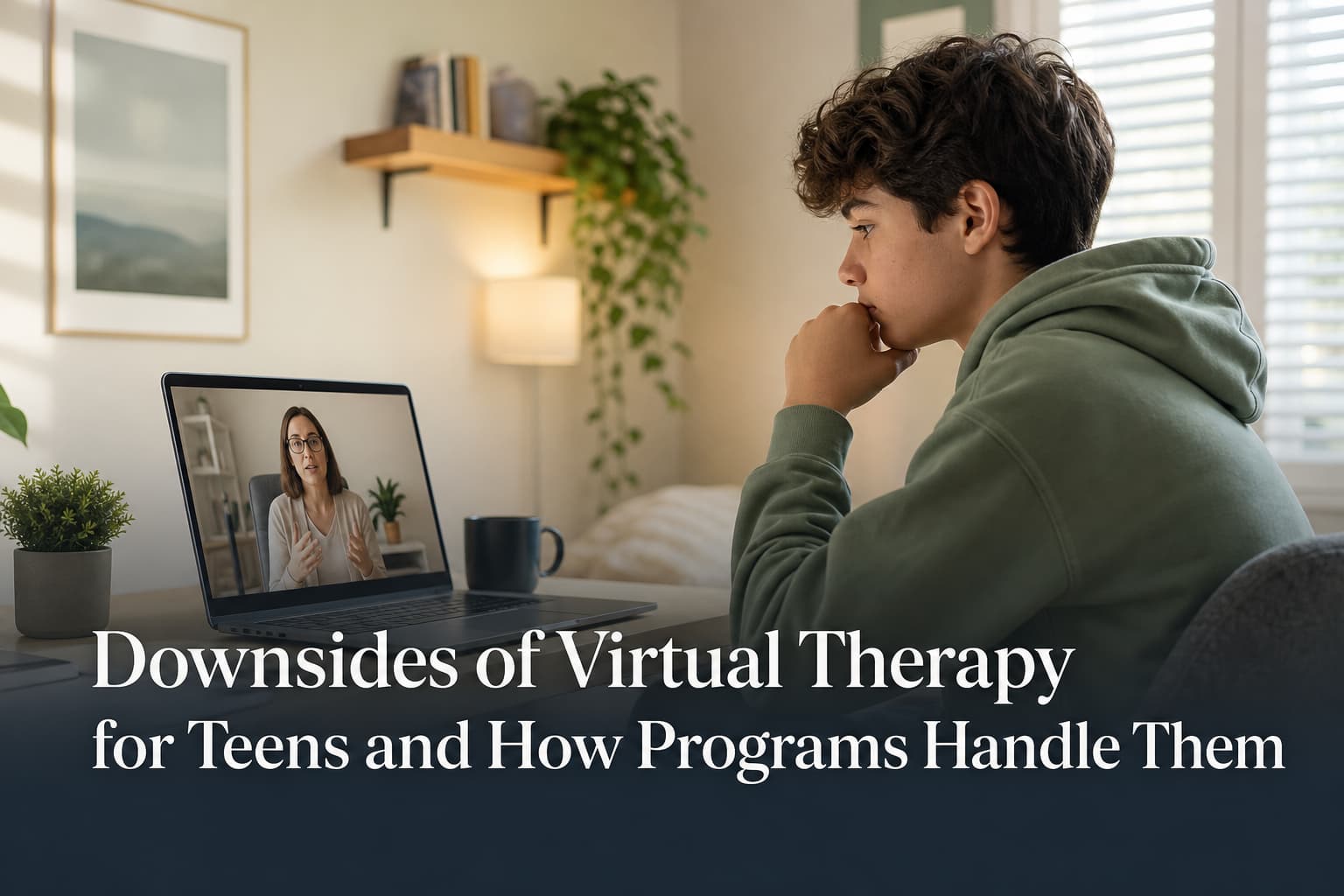
At home, you'll mainly need a private, quiet space with a reliable internet connection, because sessions are confidential and your teen needs to speak freely. Your teen must be physically in California during sessions. If a session happens while your teen is in a car or a shared room, tell the clinician beforehand so they can adjust.
Between sessions, your teen practices what they've planned, and you can watch how it goes without hovering. Telling their clinician what worked and what didn't is part of the treatment, and it shapes the next evening's plan.
How Family Involvement Changes Teen OCD Treatment
Reassurance is the first thing most parents are asked to change, and it's harder than it sounds. When your teen asks "Are you sure the door is locked?" for the fifth time, answering feels kind. In OCD, though, each answer teaches the brain that the doubt was worth responding to, so the question comes back sooner and louder.
In virtual IOP, family sessions give you a clinician's coaching on exactly these moments. You'll learn what to say instead, how to acknowledge your teen's distress without feeding the ritual, and when to step back. Your teen's clinician works out the plan with you, so you're not improvising at 10pm on a school night.
Expect a few practical shifts at home:
- You'll agree on one calm, consistent response to reassurance requests, so your teen hears the same thing from every adult in the house.
- You'll start easing out of accommodations like extra laundry, special rules at meals, or answering on cue, usually in small steps your teen knows about in advance.
- You'll hear how exposure practice is going, so you can encourage it without checking up on it.
Teens often worry that family sessions mean they're being blamed. They aren't. OCD pulls everyone in, and the goal is to get the household working with your teen against the symptoms rather than around them. Your teen's own sessions stay private enough for them to speak freely, and the clinician decides what's useful to share.
Some weeks will feel worse before they feel better. When rituals get less support at home, anxiety can spike for a while, and that's a good moment to tell the clinician rather than quietly give in. They can slow the pace or adjust the plan.
What Happens When You Call and Who Fits Virtual Care
A real person answers, asks about your teen's age, where they live, and what's been happening with the OCD, and then sets up a free consultation. Most families start within a few days, and the consultation is confidential.
Have a few things nearby when you call. Jot down how long rituals take on a typical day, what your teen's current therapist is doing, and any medications. If you plan to use insurance, we verify it before enrollment, so keep your card handy. Your teen doesn't need to be ready to talk on that first call, though many teens do better when they know it's happening and have a say in it.
During the consultation, a clinician looks at symptoms, safety, and how much structure your teen needs. From there, your teen is matched to virtual IOP or outpatient, and that level can change later in either direction.
Virtual care fits when your teen is 12 to 17, is physically in California during sessions, has a private and secure space at home for confidential telehealth, and can take part safely from home. It's not the right fit for every situation. We don't provide inpatient, partial hospitalization, residential, or emergency services, and we don't see teens in person. If your teen is in immediate danger, call 911, or call or text 988. When a teen needs a higher level of care, we coordinate with local providers so you're not left searching on your own.
If your teen's OCD is outpacing weekly sessions, call us at 619-354-3569 or book a free consultation, and we'll talk through what level of care makes sense.
Common Questions
Does virtual IOP replace my teen's current OCD therapist?
Not necessarily, and you can raise this at your free consultation. Individual therapy happens inside our IOP or outpatient program, so your teen would work with a clinician on our team. Many parents keep their teen's current therapist informed, and we can talk through how the two care teams share information with your consent.
Will my teen have to miss school for virtual IOP?
No. Sessions run Tuesday, Wednesday, and Thursday at 5pm, 6pm, and 7pm PT, after the school day. Enrollment doesn't create a 504 plan or IEP, though, and we don't act as a substitute school. If OCD is already affecting attendance or test-taking, ask admissions how we can support your conversations with the school.
What if my teen refuses to join or won't talk in group?
Reluctance is common, especially when exposure work sounds frightening. Your teen's clinician starts with individual and family sessions alongside the group, and the pace is set around what your teen can handle. Telling your teen the plan in advance and giving them a say in scheduling often helps. Let the clinician know early so they can adjust how group participation begins.
Does my teen need a formal OCD diagnosis before calling?
No. You can call with a pattern of symptoms and a few notes on what you've seen at home. A clinician reviews symptoms, safety, and daily functioning at the consultation to decide whether virtual IOP or outpatient fits. If you need a separate diagnostic evaluation, ask admissions what we offer and how psychiatric consultation can be arranged.
Can medication be part of treatment?
Psychiatric consultation is part of virtual IOP when it's indicated, so a medication conversation can happen as part of your teen's care. We don't run a standalone prescribing service. If your teen already takes medication, bring the names and doses to the consultation, and ask admissions how consultation would work alongside their current prescriber.
Written by
Mental Health For Teens
Clinical TeamVirtual IOP and outpatient mental health programs for teens in San Diego and across California.