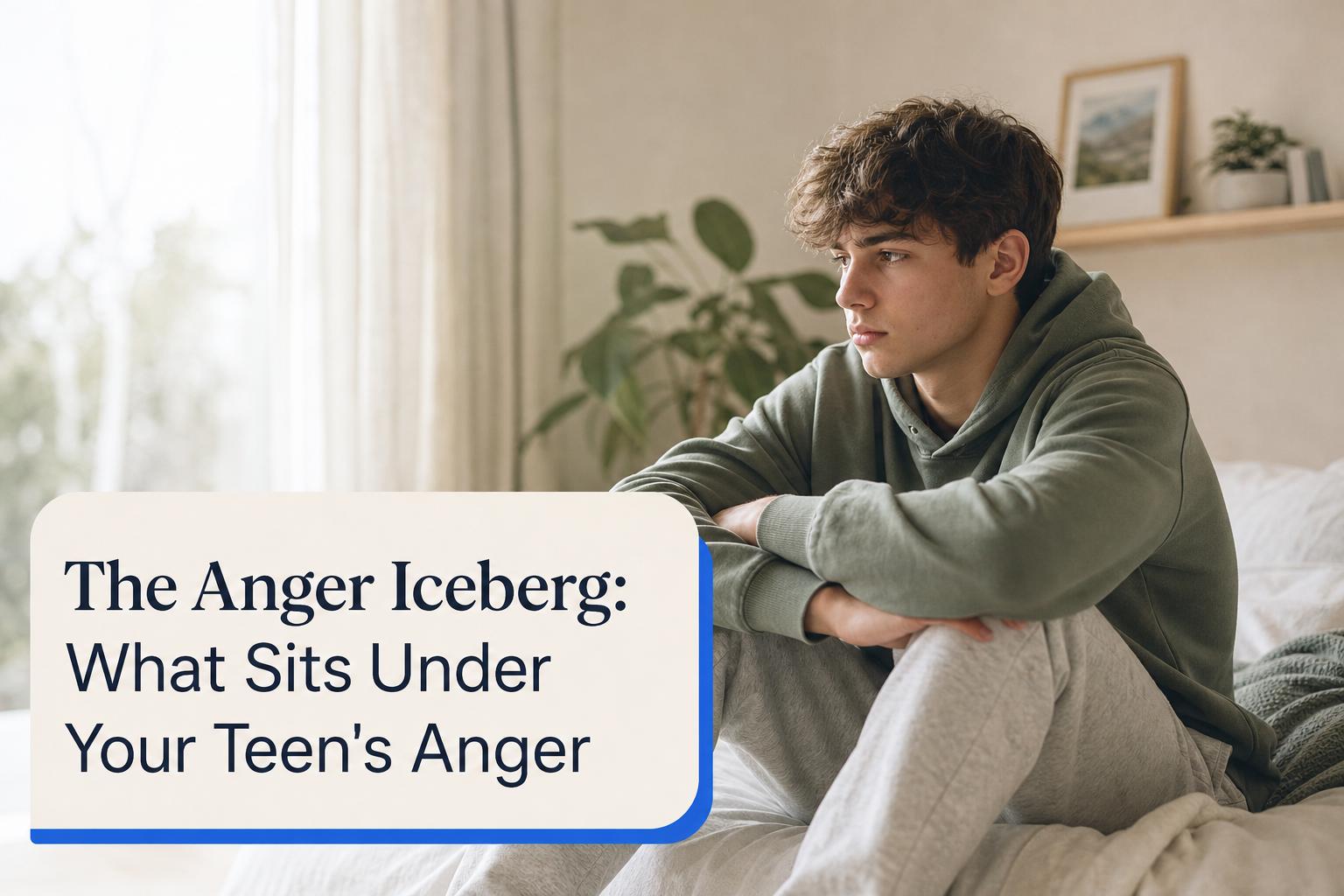


When a teen melts down or goes silent after a loud, busy, screen-heavy day, parents often call it overstimulation, and the overstimulated meaning is simply that the day gave them more input than they could handle. It tends to show up as snapping, tears, or a closed bedroom door.
Overstimulated Meaning for a Teen in Plain Terms
Overstimulation is a description of an experience, not a diagnosis. Parents usually use it for a teen who seems full after a long day and can't take one more question, noise, or request.
A clinician decides whether something more is going on. If you want to see how this pattern ties into mood and reactivity, our page on teen emotional dysregulation explains how we think about it.
What Overstimulation Looks Like at Home and After School
Timing is worth watching. If your teen is fine in the early afternoon and explosive or flat once they're home, note when it happens. Our post on after-school restraint collapse in teens covers that window.
Parents often describe sharp irritability over small requests, quick crying, going quiet in a dark room, wearing headphones constantly, or pulling away from conversation at dinner.
Look at the pattern across days rather than judging one rough afternoon. If your teen stays irritable, withdrawn, or tearful even on slow weekends, raise it with a clinician.
Keep a simple note for a week or two with the time of day, what came before, and how long the reaction lasted. That record is easy to share with a pediatrician or therapist, and a clinician, not a list of signs, makes any diagnosis.
Common Triggers: School Noise, Group Chats, and Packed Schedules
Your notes are the best way to find your teen's own triggers. Check which days ran longest, how much screen time came right before a blowup, and how much downtime there was between school and the next demand.
Once a pattern shows up, try protecting a screen-free stretch right after school, even 30 minutes, and see whether the evenings change.
If the reactions keep happening even on quiet, low-demand days, share your notes with your pediatrician or a therapist.
How Overstimulation Differs From Anxiety, ADHD, and Sensory Differences
A useful first question is whether your teen recovers after quiet and time alone, or whether the distress follows them into calm moments. Distress that persists across settings and weeks deserves a clinician's look.
With anxiety, the trigger is often worry rather than sensory input. The National Institute of Mental Health describes anxiety disorders as persistent fear or worry that interferes with daily life. If you see that pattern, our page on teen anxiety treatment explains how we approach it.
ADHD centers on attention, impulse control, and activity level. Our program doesn't provide ADHD diagnostic evaluations, so your pediatrician is the right first call if you suspect it. Our ADHD treatment page describes the therapy support we do offer.
Sensory processing differences involve strong, consistent reactions to specific sensations, such as clothing tags or food textures. A pediatrician can refer your family to a specialist, such as an occupational therapist, for that kind of evaluation.
What Helps in the Moment and Over the Week
In the moment, lower the input and hold off on the conversation. When your teen walks in wound tight, skip questions about homework, offer a snack and some water, and let them have a quiet room.
If the reaction is intense, our post on the 3-3-3 rule for anxiety in teens offers a grounding exercise, and the emotion wheel for teens can help them name what they're feeling once they're calmer.
Over the week, you can try one change at a time, such as an open afternoon or phones in another room at a set hour. Give each change a couple of weeks before adding another.
Skills practice helps too. CBT and DBT are part of the virtual care we offer, and parent coaching is built in so you can practice the same approach at home.
When to Ask for an Evaluation
Ask for an evaluation when the reactions last beyond a few weeks, show up on quiet days too, or start costing your teen sleep, grades, friendships, or time with family.
Start with your pediatrician. They can check sleep, vision, hearing, and physical health, talk through attention concerns, and refer you to a specialist if sensory differences seem likely. Bring your notes on timing, triggers, and how long each reaction lasted.
If the concern is mood, worry, or emotional reactivity, a therapist can assess what's driving it. We offer virtual IOP and outpatient care for teens in California, and the level of care is based on safety, daily functioning, and how much structure your teen needs.
Calling us begins with a free, confidential consultation, and there's no obligation to enroll. A parent or legal guardian completes that step. We also verify benefits before enrollment and explain estimated costs in plain language, though benefits vary by plan.
To request your free consultation, call 619-354-3569 or use the form at Mental Health For Teens.
Written by
Mental Health For Teens
Clinical TeamVirtual IOP and outpatient mental health programs for teens in San Diego and across California.