

Art therapy for teens when words aren't enough
Licensed clinicians use drawing, collage, and creative expression in our virtual IOP and outpatient programs — helping California adolescents process anxiety, trauma, and stress without needing artistic skill.
- Joint Commission accredited
- In-network insurance
- CBT & DBT
- California telehealth
12–17
ages served
Virtual
care across CA
Art therapy
modality
Licensed
clinicians
Creative expression as clinical care
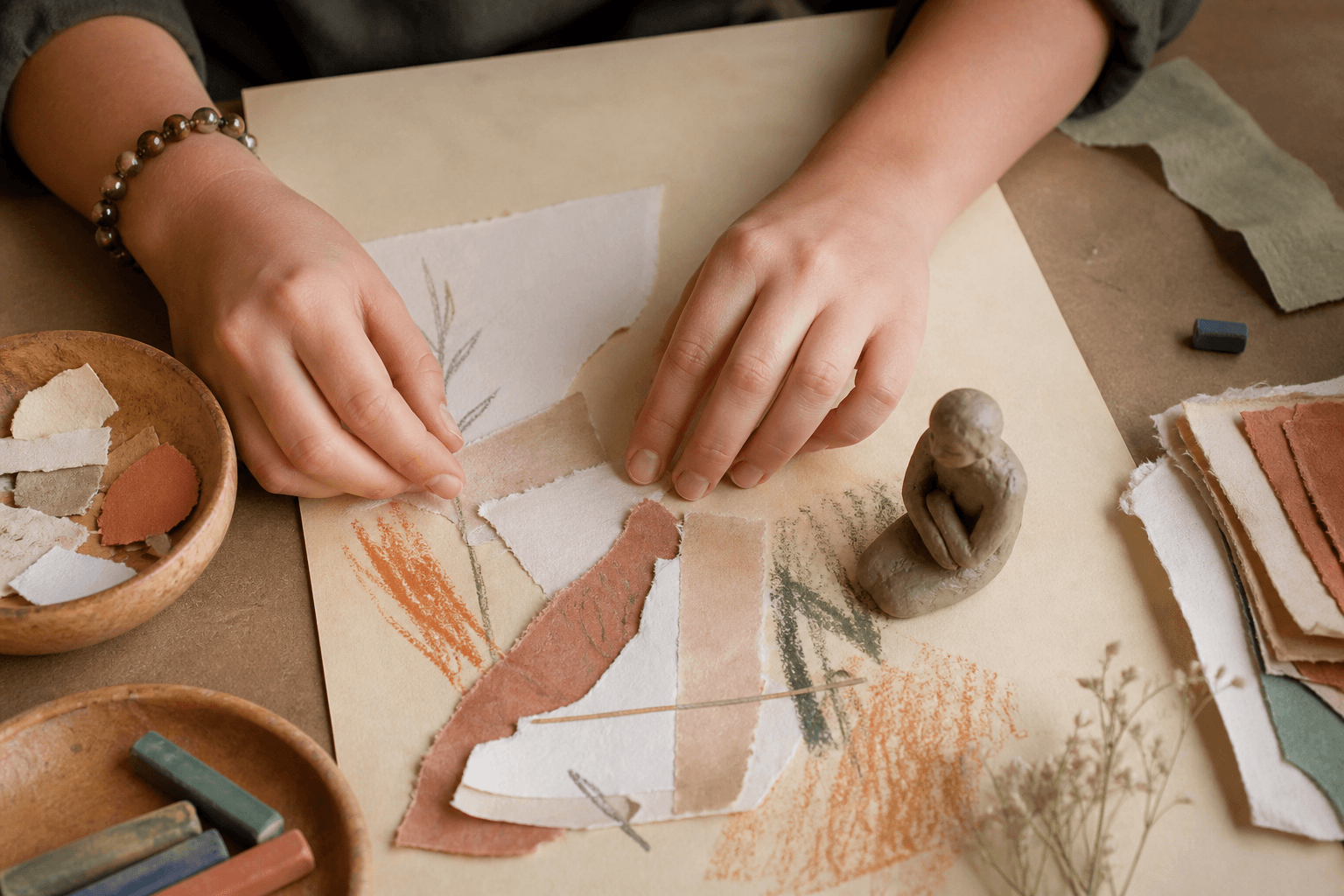
At Mental Health For Teens, art therapy is a licensed mental health approach — not an art class. Clinicians guide teens through intentional creative tasks to explore emotions, build regulation skills, and process experiences that are difficult to talk about directly.
In our virtual programs, art therapy is integrated with individual therapy, DBT skills groups, and family sessions. Teens need basic supplies at home; clinical goals drive every activity — not artistic talent.
In our programs
- Led by qualified mental health clinicians
- No art experience required
- Integrated with virtual IOP & outpatient
- Trauma-informed when clinically appropriate
What happens in a teen art therapy session
Each session follows a predictable rhythm so teens know what to expect — safety first, then create, reflect, and carry something useful into the week.
Ground & choose
The clinician checks mood and safety, then helps your teen pick a medium — pencil, watercolor, collage, or clay — matched to the session goal.
Create with intention
Prompts might explore worry, identity, grief, or body sensations. The focus is expression and observation, not producing a 'good' piece of art.
Name what surfaced
Together they connect colors, shapes, and choices to real feelings and patterns — linking the artwork to school, friendships, and family dynamics.
Integrate & plan
Your teen leaves with a coping skill, journal prompt, or small homework task — often shared with their individual therapist for continuity.
Issues art therapy can support in teens
Fit is always assessed individually. These are common reasons adolescents benefit from creative clinical work in our programs.
Anxiety & overwhelm
Externalizing worry through drawing or collage can reduce rumination and open space for CBT and DBT skills practice.
Trauma & difficult memories
When clinically appropriate, expressive work supports trauma-informed care — paced carefully alongside talk therapy and safety planning.
Depression & low motivation
Small, structured creative tasks can re-engage teens who shut down verbally — building momentum without pressure to perform.
Stress & emotional flooding
Art-making can anchor regulation before processing — especially for teens with emotional dysregulation or sensory overload.
Communication barriers
Adolescents who freeze in traditional talk therapy may share more through metaphor, symbols, and visual storytelling.
Group connection in IOP
Shared prompts in moderated groups reduce shame and help teens see they are not alone in what they feel.
How online art therapy works at home
Secure video from a private space — simple supplies, clear privacy rules, and no performance pressure.
At-home session flow
- 01
Space & supplies
Paper, pencil, or markers from home. Your clinician sends a short list before session one.
- 02
Secure video session
HIPAA-compliant platform. Camera shows the work when your teen is ready — never forced.
- 03
Share at their pace
Art is confidential clinical work — not graded, displayed, or reviewed like school.

Parents get guidance on giving space during sessions while staying available if needed.
- HIPAA-compliant telehealth platform
- Basic at-home supply list — no expensive kit
- Private session space with minimal distractions
- Coordinated with individual, group & family therapy
- Optional parent check-in on setup before first session
When virtual art therapy is appropriate
Art therapy is one modality within our IOP and outpatient programs — not a crisis line or standalone drop-in service.
Often a good fit
- Teens 12–17 who engage through creative or hands-on work
- Stable at home with a private space for virtual sessions
- Anxiety, depression, trauma, or stress needing structured support
- Families seeking coordinated virtual care across California
- Teens already in or stepping into IOP or outpatient levels
Another level may be needed
- Immediate safety crisis — call 911 or 988 first
- Active psychosis or severe substance use requiring 24-hour care
- Teens who cannot participate safely on video
- Expecting art therapy alone without a full treatment plan
- No reliable private space or home supervision for consistent virtual sessions
Where art therapy fits in care
Art therapy is woven into these virtual programs as part of a coordinated clinical plan.
9–12 hrs / week
Virtual IOP
Structured intensive care through secure telehealth when weekly sessions are not enough.
1–3 sessions / week
Outpatient program
Weekly individual, group, and family therapy with coordinated care.
Flexible scheduling
Teen therapy
Individual counseling as a standalone or step-down level of care.
Connected therapies & conditions
Other therapies
From first call to first session
Most families move from first call to first session within days — not weeks of waiting.
- 01
Speak with admissions
A confidential call with our admissions team to understand your teen and answer questions. It is not a clinical evaluation.
- 02
Assessment and benefits
If you move forward, a licensed clinician completes the clinical assessment. We match the level of care and verify insurance benefits.
- 03
Start virtually
Many families can begin within five to seven business days when virtual care is clinically appropriate, program capacity is available, and insurance authorization is complete.
FAQs
What families ask before starting — every answer is a starting point, not a diagnosis.
No. Art therapy focuses on expression and clinical goals — not talent, grades, or portfolio quality. Stick figures and abstract marks are clinically valuable.
Licensed mental health clinicians with training in expressive and creative modalities. Sessions are therapy — not art instruction from a non-clinical teacher.
Usually paper, pencil, and markers or colored pencils. Your clinician may suggest collage materials or watercolor for specific goals — kept simple and affordable.
Yes. Many teens prefer creating in a familiar private space. Clinicians adapt prompts for the camera and help with setup so sessions feel natural.
When part of IOP or outpatient treatment, sessions are billed as mental health therapy. We verify benefits during your free consultation.
Art classes teach technique and aesthetics. Art therapy uses creative process to support mental health goals — with assessment, safety monitoring, and treatment planning.
See if this modality fits your teen
Book a free consultation — we'll explain how this therapy works in our virtual IOP and outpatient programs, and verify insurance.