
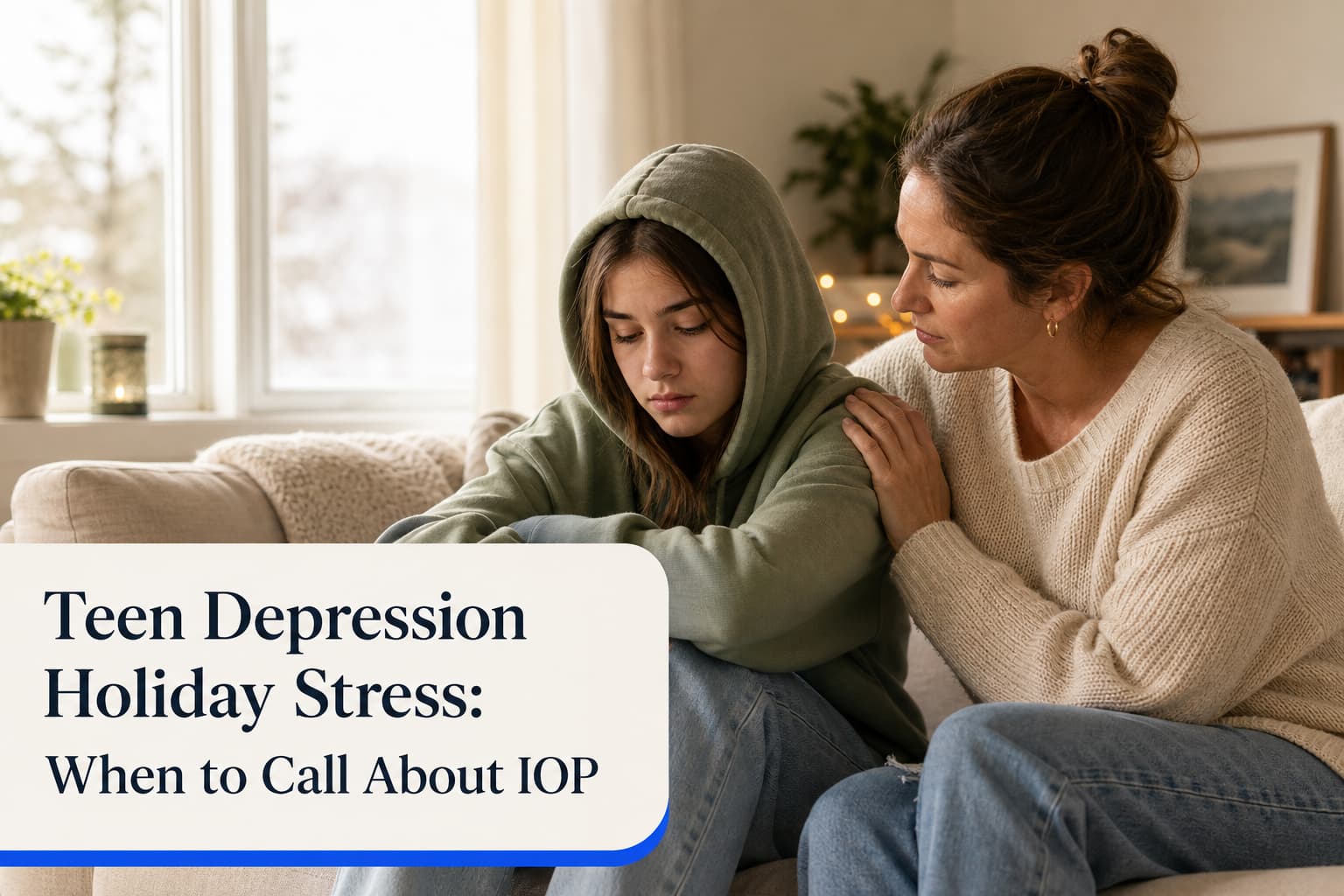
School calendars hold a lot of teens together. When winter break removes classes, sports, and the daily check-ins from teachers, symptoms of depression often get louder at home, not quieter.
If you are a California parent watching your 12- to 17-year-old sink over the holidays, you do not have to wait until January to choose a level of care. Teen depression holiday stress shows up as a clear pattern. The next step depends on safety, day-to-day function, and how much support your teen already has.
If your teen is in immediate danger, having thoughts of suicide, or cannot stay safe, call or text 988 (Suicide & Crisis Lifeline) or dial 911. Virtual IOP and outpatient therapy are not emergency rooms.
Start with safety before you sort holiday stress
Any talk of wanting to die, plans to hurt themselves, giving away belongings, or sudden calm after deep despair is a crisis signal. Use 988 or emergency services first. Stay with your teen until help is in place.
Virtual care through Mental Health For Teens is structured treatment at home, not acute medical care. Once safety is stable, you can weigh weekly outpatient therapy against a higher level like virtual IOP.
How holiday stress lands on teens living with depression
Depression in adolescence is more than a low mood. The National Institute of Mental Health describes persistent sadness, loss of interest, sleep and appetite shifts, trouble concentrating, and feelings of worthlessness that last most days for weeks. Holidays stack extra load on that baseline.
Travel wrecks sleep. Family gatherings raise social demand. Money stress shows up at the dinner table. Teens who already live with depression often lose the routines that held symptoms in check during the school year. You may see more isolation in their room, sharper irritability with siblings, or a teen who stops showering, gaming with friends, or eating regular meals.
Seasonal timing matters. Shorter daylight, less activity, and long unstructured days can deepen withdrawal. That does not automatically mean a formal seasonal pattern diagnosis. Track change against your teen’s normal, not against a cheerful holiday ideal.
Signs it is more than a rough week off school
A few hard days after a family argument are common. A pattern that lasts most of break and blocks basic function is different. Watch for depression symptoms that intensify under holiday stress and do not ease with rest, connection, or a lighter schedule.
Call sooner if grades were already slipping before break and your teen now cannot finish simple tasks, if they refuse most meals or sleep most of the day, or if they cut off friends they usually keep. Panic attacks, self-harm urges, or substance use to numb out also raise the level of care you should consider. The American Academy of Child and Adolescent Psychiatry notes that depression in children and teens needs professional evaluation when symptoms persist and impair daily life.
Trust the gap between who your teen was in October and who they are in late December. Parents often spot that gap first.
When weekly outpatient therapy is not enough
Outpatient therapy and online therapy help many teens. One session a week can fall short when symptoms are dense, home is tense every evening, or your teen cannot use skills between appointments. Holiday weeks widen that gap. There is more unstructured time and fewer outside adults watching.
Raise IOP when your teen still declines after consistent outpatient work, when family conflict keeps resetting progress, or when school return looks risky because they have barely left bed during break. IOP sits between standard outpatient care and full hospitalization. It adds hours of structured treatment each week without an inpatient stay.
Mental Health For Teens offers Virtual IOP, Outpatient, Online therapy, and Family therapy for California teens ages 12-17. Family therapy matters here. Holiday stress is rarely only inside one person’s head. Caregivers need tools too.
What virtual IOP looks like for California families
Virtual IOP brings group and individual work into your home on a set schedule. Your teen stays in California, keeps some normal life, and still gets a higher dose of care than a single weekly hour. Sessions run online, which helps during travel freezes, illness, or when San Diego traffic would block attendance.
Care focuses on structured virtual programming, not a holiday pep talk. Parents stay involved through family sessions and clear updates on goals. Teens keep privacy in clinical work while adults get enough information to support evenings and weekends.
If you are local, Mental Health For Teens is at 7220 Trade St ste 125, San Diego, CA 92121, and you can reach the team at 619-354-3569. Telehealth expands access across California for eligible teens in the 12-17 range when virtual care fits clinically and legally.
“Holiday breaks do not pause depression. They often reveal how much structure your teen was borrowing from school.”
When teen depression holiday stress means calling about IOP
Call while you can still plan, not only after a crisis. Mid-break is a useful checkpoint. If sleep is inverted, hygiene has dropped, and your teen cannot name one thing they look forward to in the new year, wait-and-see is a weak plan.
Call before school restarts if last semester already showed falling grades, nurse visits, or counselor concerns tied to mood. Returning to campus with untreated depression plus holiday regression sets up a hard January. Earlier contact also gives you time to sort schedules, consent, and insurance questions without rushing after an emergency.
You do not need a perfect speech. Describe what changed, what you have already tried, and what a normal day looks like now. Ask whether Virtual IOP, stepped-up outpatient care, or family therapy fits the picture. A free confidential consultation is built for that sorting work.
How parents can support without turning break into a clinic
Keep a few anchors. Same wake window most days. One shared meal when possible. Limited late-night scrolling if sleep is already broken. These are not cures. They cut chaos while you arrange care.
Skip lectures about gratitude. Teens living with depression often hear those as proof they are failing at a simple holiday. Name what you see instead. “You have been in your room since noon and you skipped lunch again. I am worried and I am getting us more support.” Short. Specific. No debate about whether the tree looks nice.
Protect your own bandwidth. Sibling needs, work closures, and travel plans pile up. A parent running on empty misses risk signals. Split night checks with another adult if you can. Write down symptoms so the consult call is factual, not foggy.
Common Questions
Is holiday sadness the same as teen depression?
No. Brief disappointment after a canceled trip or a tense dinner is ordinary. Depression involves lasting mood change, loss of interest, and real drops in sleep, energy, focus, or self-worth across weeks. Holiday stress can intensify those symptoms rather than create a one-day blue mood.
Can virtual IOP work if we are traveling in California?
Often yes, when your teen remains in California, has a private space and reliable internet, and the clinical team agrees the setting is appropriate. Tell the program about travel dates early so attendance expectations stay clear.
Should we wait until school counselors are back in January?
Do not wait if function is falling or safety feels shaky. School staff are valuable partners, yet depression does not pause for in-service weeks. Outpatient or Virtual IOP decisions can start from a parent-initiated consult now.
What if my teen refuses to join a video group?
Refusal is common and still worth a clinical conversation. Some teens warm up after a one-to-one meeting, a clear explanation of privacy, or a short trial. Others need a different outpatient mix first. Forcing a camera on without buy-in rarely holds.
When is the ER the right door instead of IOP?
Use the ER or 911 when there is active suicidal intent, a suicide attempt, severe self-injury, psychosis, or a teen who cannot be kept safe at home. IOP is for higher-need outpatient structure after acute risk is stabilized, not a substitute for emergency care.
How do we start with Mental Health For Teens?
Book a free consultation, call 619-354-3569, or use the free assessment path on the site. Share age, California location, current symptoms, and any outpatient history so the team can point you toward Virtual IOP, outpatient therapy, online therapy, or family therapy.
Book a free consultation
Free confidential consultations. Most families start within a few days. If teen depression holiday stress has turned your break into crisis management, get a clear read on whether Virtual IOP or another outpatient level fits before school doors open again.
Call 619-354-3569 or book a free consultation with Mental Health For Teens. California teens ages 12-17 and their caregivers can sort next steps without waiting for the calendar to fix what depression will not.
Written by
Mental Health For Teens
Clinical TeamVirtual IOP and outpatient mental health programs for teens in San Diego and across California.